
Repression Reseach
Background
In December 2024, the Data Analytics and Insights and Pathways circles surveyed our mailing list in an anonymous, ethically approved, academically-rigorous study. This was aimed at understanding the experience, attitudes and barriers to participation in the movement and some more detailed questions about the participants’ personal experience of XR and activism in general.
Check out the full results of the survey.
The UK has increasingly penalized climate activism, with 17% of all protests between 2019 and 2024 resulting in arrests compared with the international average of 6.3% (Berglund et al., 2024). We wanted to find out if people on the XRUK mailing list had experienced repression and how that effected their intention to take direct action. In March 2026, these results were published in the academic paper Nature Climate Change.
Summary of Findings
This figure summarises the demographics of the study and tells us how many of the respondents had experienced repression.
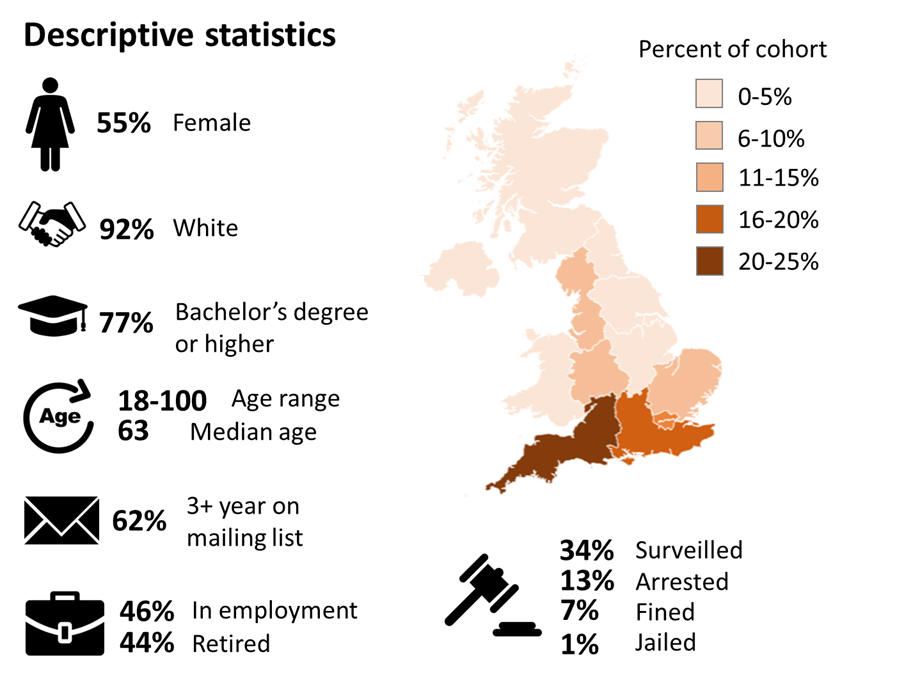
We found over 10% of respondents had been arrested and 34% surveilled. One percent had been to jail.
The research demonstrates two things. First, we do see a chilling effect for those who have not been arrested for protest and who experience fear related to criminal justice responses to their activism. However, climate activists who directly experienced punishment in response to their actions may become more – not less – willing to intensify their activism in the future.
The research also suggests that people's emotions in response to repression play a big role in their intention to act. People who have experienced repression feel less fear and double down, indicating they're more likely to take part in disruptive activism.
When people anticipate repression, if they feel anger/outrage, they're more likely to engage in non-disruptive activism. If they feel anger/fear or contempt they're more likely to engage in more disruptive activism. And if they feel fear, they're less likely to take part in disruptive activism.
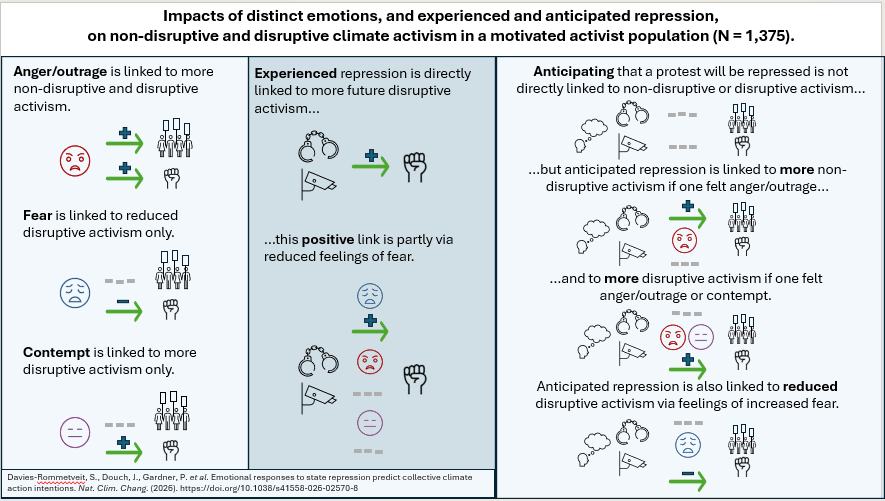
The legislation brought in looks to have achieved the opposite of what it set out to achieve, inhibiting non-disruptive protesters and emboldening disruptive protesters.
Quotes from the Team
“By highlighting the emotional mechanisms that link repression and future action intentions, our research clarifies why some activists withdraw, while others become even more committed, including to disruptive activism,” said Sunniva Davies-Rommetveit.
Dr Peter Gardner added: “In light of the climate and ecological emergency facing all of humanity, the freedom for ordinary members of society to engage in the full range of nonviolent protest without punitive repercussions is essential for raising the alarm about the existential environmental threat we now face.”
Dr Nicole Tausch explained that recent legislation restricting disruptive but peaceful protest such as the Public Order Act 2023 “may not produce the behavioural outcomes policymakers anticipated”.
Dr Tausch concluded that protest repression might, for committed activists, “reinforce willingness to engage in non-violent direct actions aimed at accelerating climate policy change. Policymakers should be aware that efforts to restrict protest may in fact strengthen activists’ commitment rather than weaken it”.
References
Berglund, O., Brotto, T. F., Pantazis, C., Rossdale, C. & Cavalcanti, R. P. Criminalisation and Repression of Climate and Environmental Protests (Univ. Bristol, 2024)